How Many Cows does it take to make a Pound of Butter?
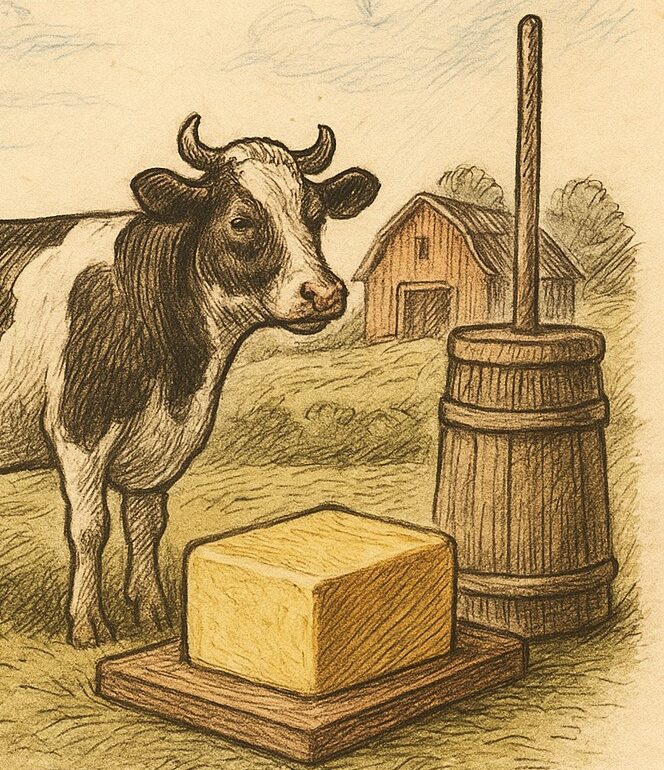
At first glance, the question of how many cows it takes to make a pound of butter sounds simple. Yet behind that creamy yellow pat lies a surprisingly complex journey. It begins in the milking parlor and ends with the rhythmic slap of butter paddles. To answer this question, we need to understand how much milk cows produce, how much cream is in that milk, and how much butter that cream yields. Along the way, we’ll uncover a few interesting truths about the dairy process and what it really takes to bring butter to your table.
The Basics: Milk, Cream, and Butter
Butter is made from the fat in cow’s milk, specifically the cream. Whole milk typically contains about 3.5% to 4% milkfat. When milk is left to sit, the fat naturally rises to the top, forming cream. Today, industrial cream separation is done through centrifugation, which spins milk at high speeds to extract cream more efficiently.
To make one pound of butter, you need approximately 2.25 to 2.5 gallons of whole milk. This is because it takes about 21.2 pounds (roughly 2.5 gallons) of milk to yield 1 pound of butter, depending on the fat content of the milk and the efficiency of the butter-making process.
How Much Milk Does a Modern Cow Produce?
The average dairy cow in the U.S. today produces about 6 to 7 gallons of milk per day, depending on breed, diet, and stage of lactation. Holstein cows, the most common breed used in commercial dairying, can even produce upwards of 8 gallons a day under optimal conditions.
If we take the average of 6.5 gallons of milk per cow per day and divide that by the 2.5 gallons needed to make a pound of butter, we get the answer:
One cow produces enough milk in a single day to make approximately 2.6 pounds of butter.
So, if you’re only making one pound of butter, it takes the milk from roughly 1/3 to 1/2 of a modern cow’s daily production—or, more practically, part of one cow’s milk for one day.
Looking Back: How Many Cows Did It Take in the Late 1800s?
In the late 19th century, the story was quite different. Dairy cows in the 1880s typically produced only 2 to 3 gallons of milk per day—less than half of what today’s cows yield. This lower productivity was due to several factors: breeds focused less on milk production, less scientific feeding and breeding practices, no refrigeration, and the absence of mechanical milking or advanced veterinary care.

Given those numbers, it would have taken the entire daily output of one cow—and sometimes more than one day’s worth of milk—to produce a single pound of butter.
In 1880, one cow might yield just 1 to 1.5 pounds of butter per day—if all conditions were favorable.
That meant small farms with just a few cows often made butter in batches, saving cream over several days and relying on hand churning to transform it into butter. Cream would be skimmed off each morning’s milk and collected in a crock or tin pail until there was enough to churn. Butter-making was not just a household chore—it was a time-consuming and physically demanding process.
Factors That Influence the Yield
Several variables affect this number across time:
- Breed of cow: Today’s dairy cows are bred specifically for high milk production. In the 1800s, cows were often dual-purpose—used for both milk and meat—and produced less milk overall.
- Season and diet: Then and now, pasture quality affects milkfat content, which in turn affects butter yield. Cows on spring pasture still produce the richest, golden-colored milk.
- Butterfat content desired: European-style butter with higher fat content (82% or more) requires more cream than standard American butter. Old-fashioned churned butter often had variable fat content depending on how thoroughly the buttermilk was removed.
Conclusion
In short, it doesn’t take a herd—it takes part of a single modern cow’s daily milk yield to make one pound of butter. A century and a half ago, that same pound might have required an entire day’s work from one cow, or more. The difference underscores not only advances in agricultural science but also the hard work and ingenuity of early American farm families.
The next time you spread butter on toast, consider the quiet labor of a cow in a field—whether it’s the sleek Holstein of today or the shaggy dual-purpose cow of yesteryear—and the transformation of cream into a golden pat of everyday luxury.
© 2025 Terry Housel. All rights reserved.
This work may not be reproduced, distributed, or transmitted in any form without prior written permission from the author, except for brief quotations in reviews or scholarly works.