Machine Sheds in the Late 1800’s
When people picture an old barn, they usually think of large structures with red siding built against a hillside, haylofts, and livestock stalls. Yet one of the most useful spaces on a working farm was far less glamorous: the machine shed.
What Was a Machine Shed?
By the late 1800s, farms depended on more than hand tools. Wagons, plows, seed drills, reapers, cultivators, and other horse-drawn implements had become valuable investments. These tools were built from wood and iron; both materials that deteriorated quickly when left out in rain or snow. If exposed to the weather, iron rusted, axles seized, and wooden wheels warped or split.
Farmers responded by dedicating a protected space specifically for equipment storage. That space became known as the machine shed.
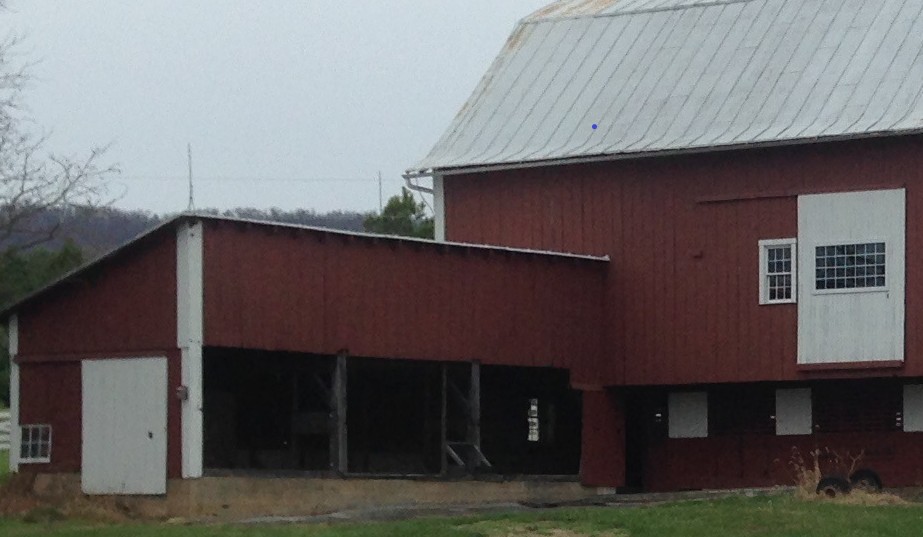
On many Mid-Atlantic and Pennsylvania farms, the machine shed occupied part of the lower level of a bank barn. Because the barn was built into a hillside, the ground floor opened directly onto the barnyard, making it easy to roll wagons and equipment in and out. Other farms added lean-to sheds or small attached wings along one side of the barn for the same purpose.
Machine sheds were simple and practical:
- wide doors
- open, unobstructed floor space
- strong timber framing
- dirt or plank floors
- easy access to the yard
Unlike livestock areas, these spaces were kept relatively clean and dry. Their job was straightforward: protect the tools that made farming possible.
In many ways, the machine shed was the farm’s version of a modern garage; except it served the most important equipment the family owned.
Parking for Horses, Not Cars
A machine shed wasn’t simply a place to “put things away.” It was organized with tomorrow’s work in mind.
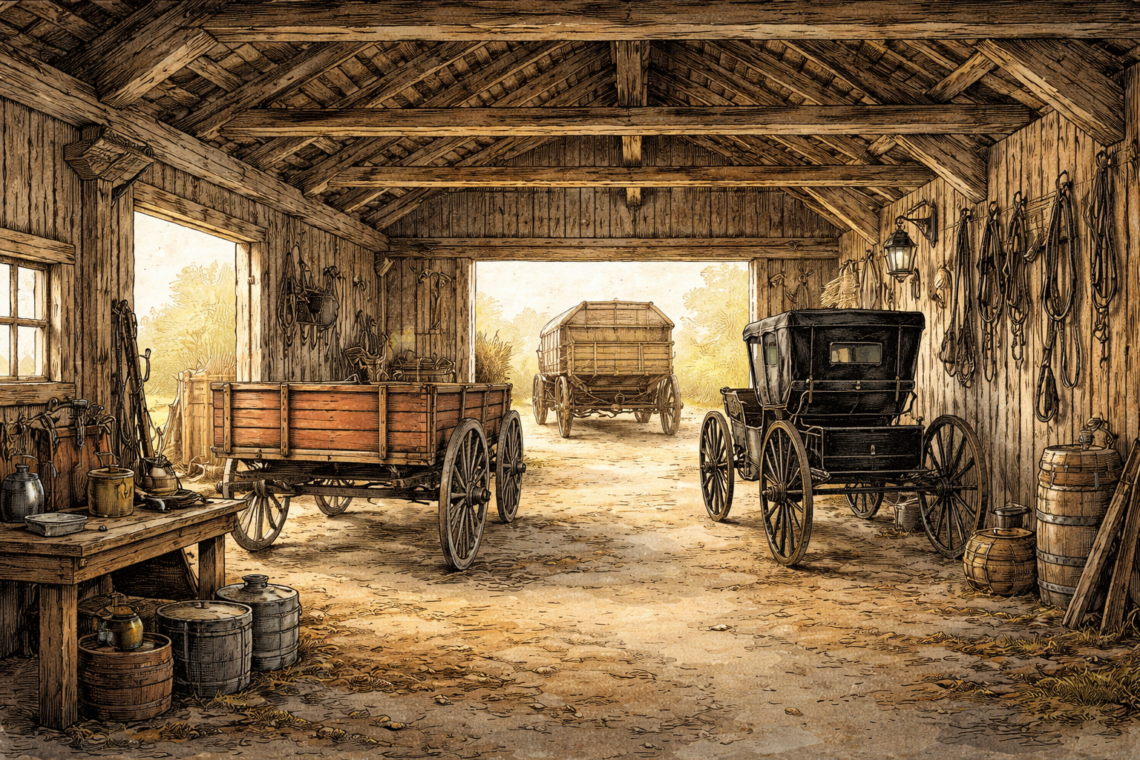
Since every wagon or implement would be pulled by horses or oxen, storage had to allow for quick hitching and easy movement. As a result, most wagons were parked facing outward toward the doors. This meant a team could be led directly into position and the wagon could roll out without turning or backing.
The order of storage usually reflected how often each vehicle was used.
Daily work wagons—feed carts, hay wagons, or manure spreaders—stood closest to the entrance. Specialty equipment or passenger carriages were stored farther back or along the walls. This simple system saved time and prevented the frustration of moving multiple wagons just to reach one.
Farmers also left space in front of each vehicle so animals could be positioned safely for hitching. Harnesses hung nearby on pegs or racks, ready to grab. Many kept grease or oil on a workbench so axles could be serviced before heading into the fields.
If oxen were used instead of horses, yokes replaced leather harness, but the logic remained the same: easy access and clear pathways.
These small habits added up. A few saved minutes each morning meant more daylight in the field. Over a season, that efficiency mattered.
Built for Work
Machine sheds were rarely decorative, but they were often well built.
Most were constructed using heavy post-and-beam framing, with mortise-and-tenon joints secured by wooden pegs. This method created strong, open interiors with few obstructions—ideal for moving wagons and large tools.
Floors varied from farm to farm. Some were packed earth, which drained well and was inexpensive. Others used wooden planks to keep equipment dry. A few wealthier operations installed brick or stone to reduce mud and moisture.
The walls themselves became storage systems. Pegs and racks held:
- bridles and collars
- lines and reins
- lanterns
- grease rags
- small tools and spare parts
Many barns included a small harness or tack room connected to the machine shed. Because leather gear was costly and easily damaged by dampness, this space was kept especially clean and dry.
During the winter months, when fieldwork slowed, the machine shed doubled as a workshop. Farmers repaired wheels, straightened metal parts, replaced boards, and prepared equipment for spring planting. The shed became a place of maintenance and preparation as much as storage.
In short, it functioned as the mechanical heart of the farm.
But as equipment grew larger and heavier, these carefully sized spaces began to feel cramped.
When the Shed Became Too Small
For several decades, the machine shed represented modern farming. It protected valuable equipment and kept daily work organized.
Then agriculture changed again.
By the early 1900s, steam-powered machines and, soon after, gasoline tractors began replacing horses. These new machines were larger, heavier, and taller than the wagons they replaced. Many simply would not fit through the narrow doors or beneath the low beams of older sheds.
Farmers adapted by building larger outbuildings or open pole barns with wider spans and higher roofs. Gradually, the traditional machine shed lost its original purpose.
Some were converted into workshops or storage rooms. Others housed poultry or small livestock. A few were abandoned altogether.
Yet many still stand today, tucked into the lower levels of old bank barns or leaning quietly against their sides. Even empty, they tell the story of a transitional time in agriculture—when farms balanced between animal power and mechanical power.
The machine shed may have been a humble space, but for nearly half a century it helped launch each day’s work. In that sense, it remains one of the most practical—and revealing—rooms in the history of the American barn.
© 2026 Terry Housel. All rights reserved.
This work may not be reproduced, distributed, or transmitted in any form without prior written permission from the author, except for brief quotations in reviews or scholarly works.