Why I Wrote The Ghosts of Shaw Mines
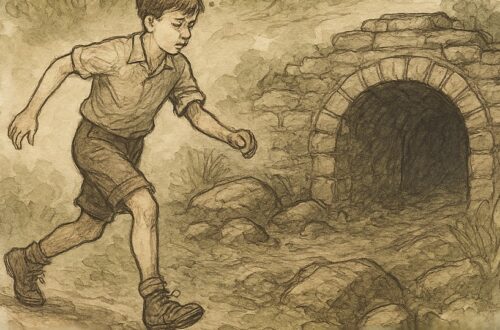
What began as a few childhood stories—memories of playing in the eerie ruins of a vanished coal town—soon became something much bigger.
As I started to write about growing up in Shaw Mines, I found myself drawn into its hidden history. The more I researched—poring over old newspapers, faded photographs, mining company maps, and forgotten government records—the more I realized there was a story that had never been fully told.
This wasn’t just about my memories. It was about the lives of the miners who came before me, the coal companies that shaped the region, and the ghostly foundations that remained long after the last load of coal was hauled away. Strip mining erased the physical town, but I wasn’t going to let time erase its story.
So I wrote The Ghosts of Shaw Mines—a blend of memoir and historical record—to preserve what would otherwise be lost.
📚 The Ghosts of Shaw Mines is more than a memoir—it’s a preservation of Appalachian coal town history and the lives shaped by it. For readers drawn to local history, genealogy, or stories rooted in place, this book offers a meaningful and often haunting portrait of a forgotten world. For educators, local libraries, and historical societies, it offers a personal lens into America’s industrial past and the immigrant communities that built it. I invite you to explore, share, and help keep these stories alive.
© 2025 Clyde Housel. All rights reserved.
This work may not be reproduced, distributed, or transmitted in any form without prior written permission from the author, except for brief quotations in reviews or scholarly works.


One Comment
David J Dickshinski
Clyde – Thank you for your contribution to the local history. My wife grew up in Lonaconing, MD – which is still a coal mining town, and was also the hometown of Lefty Grove, by some statistics the greatest left-handed pitcher in baseball history. My grandfather was a coal-miner in Nanticoke, PA before he switched to carpentry at the beginning of WWII.