The Shaw Mines Au Pairs
A Sequel Chapter to “The Ghosts of Shaw Mines”
Long before the word au pair was fashionable, and long before families sought “nannies with culture” from overseas, the girls of Shaw Mines were being quietly recruited by prominent families of Meyersdale, Pennsylvania.
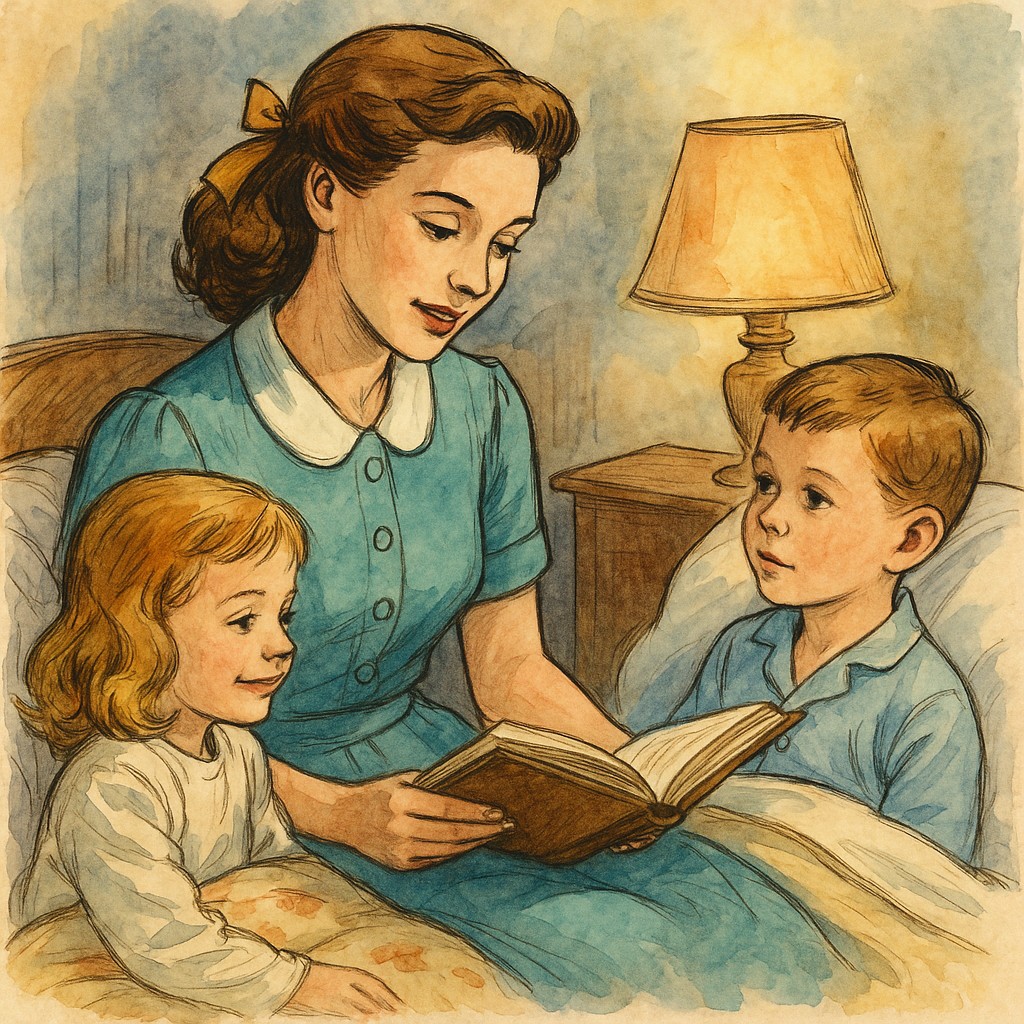
In my family, it started in the mid-1940s with my oldest sister. At about fourteen years of age, she packed a small suitcase and left our weathered homeplace, tucked among the last standing company houses, in Shaw Mines. She went to live with a local dentist and his wife, to look after their children. It was more convenient to attend school since both middle and high schools were in Meyersdale. Her weeknights and Saturdays were spent helping with the little ones, folding laundry, and learning how “town folks” lived.

Apparently, Eleanor did a fine job of it. Because once word spread, the offers came. The next sister followed, and then another. Soon, each of my older sisters was living part-time with a respected family; one with a name in town. A state representative. The owner of the Meyersdale Republican. Another dentist. Even the man who ran the Ford dealership had one of my sisters helping in his household.
On Sundays, they returned home to Shaw Mines. Dad would pick them up on the way to church or they would meet us there. From church we would all ride home together. At Sunday dinner each one would tell a week’s worth of stories and, more often than not, bring a small paper sack with a new book, tablet or outgrown toys and books from the family they lived with. These were not just trinkets. They were tokens from a world beyond the sagging porches and clink of coal stoves. They were proof that someone out there saw value in my sisters.
Why It Worked
At first glance, it might sound like a kind of child labor. And by today’s standards, it probably was. But if you peel back the layers of judgment and look at the conditions of post-war Appalachian life, it begins to make sense.
In the years after WWII, the coal towns were already beginning to fade. Shaw Mines, once a bustling enclave of miners, immigrants, and thick coal dust, had entered its twilight. Work was scarce. Opportunity was thinner still. For large families, like ours, there were more mouths than beds and fewer coins than chores.
When my sisters were asked to live with prominent families, it wasn’t exploitation. It was an expansion of outlook. They saw how electricity lit up the house, not kerosene lamps. They were surrounded by books, listened to the piano, sat at dining tables with linen napkins and silver cutlery.
It wasn’t just babysitting. It was apprenticeship; socially, educationally, and emotionally.
A Quiet Sociology
Sociologists might call it social mobility through domestic proximity. But we didn’t know that phrase. We only knew that our sisters were suddenly speaking more clearly, writing more beautifully, and dreaming a little bigger. They learned how the other half lived, not to covet it, but to understand it. They learned the rhythms of people who had options, and they brought that cadence home to the rest of us.
There was dignity in their work, even when it involved diapers and dishes. Because the real labor was invisible: they were building a bridge between two ways of life, one bedtime story at a time.
In an odd way, they became ambassadors, not just of Shaw Mines, but of the kind of resilience and adaptability that grows in places where resources are few but spirit runs deep. They softened the assumptions that town families might have had about “Shaw Mines Kids.” And in turn, they came to see that comfort didn’t always mean contentment, and that good people lived on both sides of the tracks.
Looking Back
Today, we’d never send a twelve-year-old off to work in a stranger’s home. Back then, it was potentially one of the best things that could’ve happened to them. They didn’t just help raise other people’s children; they helped raise expectations, both for themselves and for those of us who came after.
The story of the Shaw Mines Au Pairs is not one of hardship, it’s one of hope. It reminds us that sometimes, the first step toward a different life isn’t a big break or a winning ticket. Sometimes, it’s a quiet girl, holding a baby in one hand and a schoolbook in the other, teaching herself the shape of a new future.
© 2025 Clyde Housel. All rights reserved.
This work may not be reproduced, distributed, or transmitted in any form without prior written permission from the author, except for brief quotations in reviews or scholarly works.
More from the Coal Towns of Appalachia
Stories like this were once common in the coal patch towns scattered through the hills of Appalachia — places where railroads, company houses, porches, and family memory shaped everyday life.



One Comment
Anna Hamilton
Excellent article! Every word was so true. So many wonderful memories of all of us piled in the car together after church and laughing.