The Art and Science of Pruning: Shaping the Future of Our Vineyard
Pruning is one of the most important tasks in the vineyard, yet it’s one of the least glamorous. No grand harvest celebrations, no clinking glasses of wine—just the quiet work of shears snipping away last season’s growth, setting the stage for the year ahead. It may not be flashy, but without it, there’d be no wine worth drinking.
Why Pruning Matters to Wine Quality
If we let nature take its course, grapevines would grow wild, throwing out far too many shoots and clusters. While that might sound like a good thing—more grapes, right?—it actually leads to diluted flavors and uneven ripening. The purpose of pruning is to strike the perfect balance: enough buds to ensure a bountiful crop, but not so many that the vine exhausts itself trying to ripen them all.
Pruning also allows us to:
✔ Control Yield – Fewer, well-placed clusters mean richer, more concentrated flavors in each grape.
✔ Improve Sunlight and Airflow – Proper spacing prevents disease and helps grapes ripen evenly.
✔ Strengthen the Vine’s Longevity – Thoughtful cuts today keep the vine healthy for years to come.
Decisions, Decisions: What Happens When We Pick Up the Shears?
When we step into the vineyard with pruning shears in hand, every cut is a decision that affects the future of the vine—and the wine it will produce. Here’s what we consider:
🍷 Which Pruning Method to Use?
- Spur Pruning (short, evenly spaced cuts) vs. Cane Pruning (selecting fresh, longer fruiting canes each year). The choice depends on the grape variety and the vineyard’s needs.
🍷 How Many Buds to Leave?
- Too many? The vine struggles to ripen all its fruit. Too few? It may grow too aggressively without enough fruit to slow it down.
🍷 Which Wood to Keep?
- Healthy, well-positioned canes are kept; weak or damaged wood gets the chop.
🍷 What’s the Forecast?
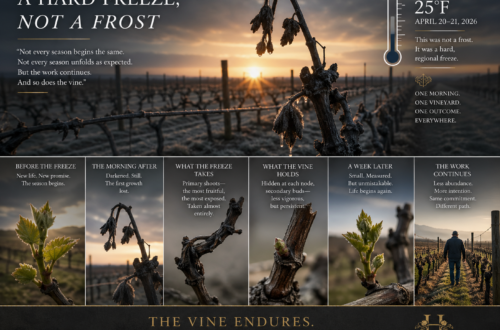
- Late frosts can undo all our careful work, so timing is key. We may adjust pruning dates or leave extra buds to hedge our bets.
A Waiting Game: From Pruning to Budbreak
Once pruning is complete, all we can do is wait. The first sign of spring’s arrival in the vineyard is budbreak—those tiny, fuzzy buds swelling and bursting open, revealing the season’s first green leaves. But it’s a nerve-wracking time. Late frosts can wipe out an entire year’s crop in a single cold snap. The average last frost date for our vineyard is May 15, and we’ll be watching the forecast closely, hoping Mother Nature is kind.
© 2025 Clyde F. Housel. All rights reserved.
This article may not be reproduced or distributed without written permission from the author.