The Town Along the Great Allegheny Passage Trail That Surprised Me Most
When people ask which town along the Great Allegheny Passage surprised me the most, I usually pause before answering. Because the answer sounds too simple.
Sand Patch.
For most of my life, Sand Patch was little more than a railroad crossing with a handful of houses pressed against the mountain. It was my father’s hometown, the place where I visited my grandparents. The place where I fished Flaugherty Creek and picked huckleberries on the slopes of Scratch Hill. To me, it existed as a point on a map and a bend in the tracks. Someplace you visited or passed through but never stopped to study.
I thought I understood Sand Patch.
I didn’t.
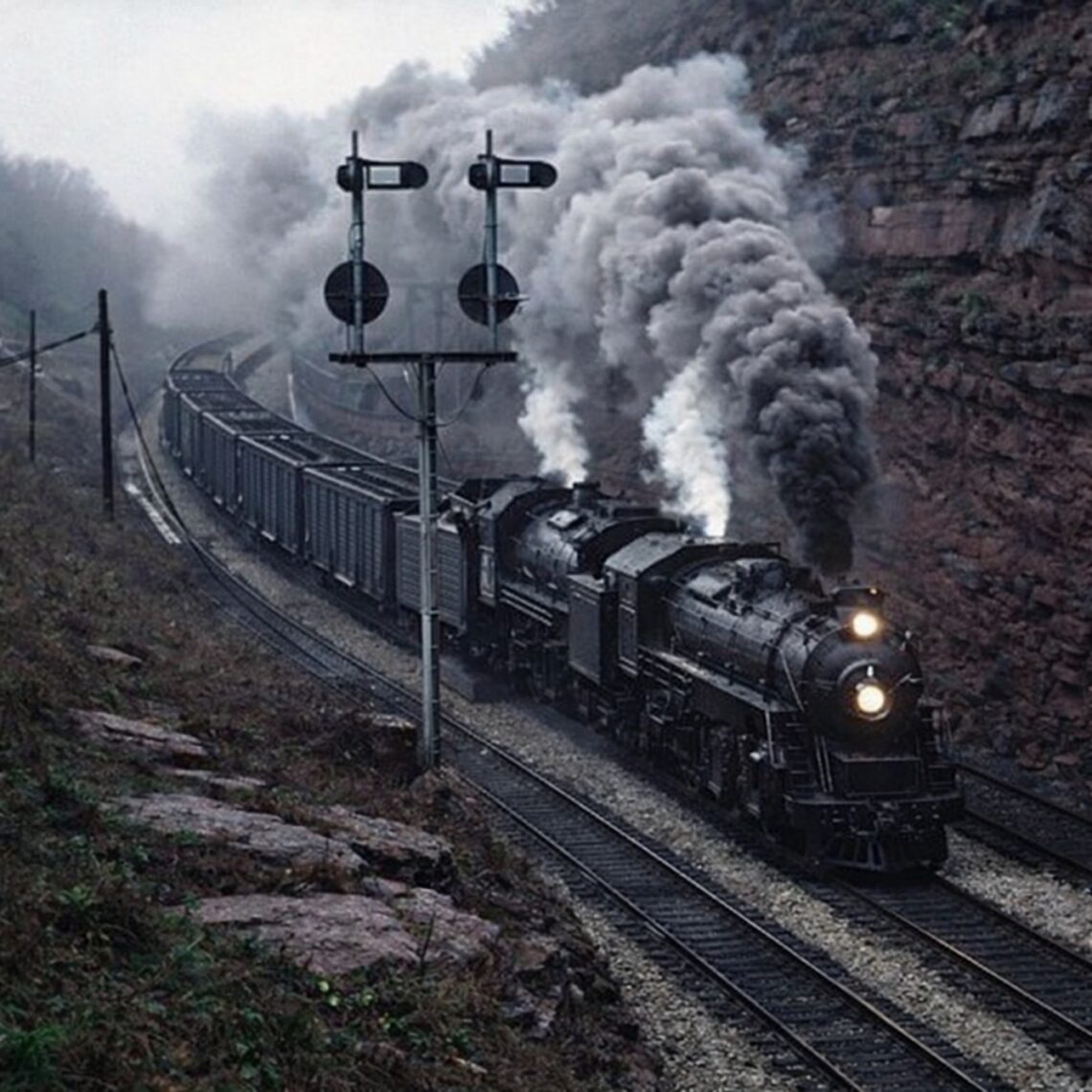
What took extensive research to fully grasp, was that Sand Patch had once been one of the most important railroad gateways in the eastern United States. Long before it was a quiet ridge crossed by hikers and cyclists, it was a place where coal met steel, where east met west, and where the mountain itself dictated terms.
The Sand Patch Tunnel and the steep railroad grade that climbed toward it were engineering feats born of necessity, not convenience. Every ton of coal destined for mills, every piece of freight moving between the Midwest and the East Coast, depended on that narrow passage through the Alleghenies. The railroad did not choose Sand Patch because it was easy. It chose it because the mountain allowed no better alternative.
And the mountain never made it easy.
Railroad men knew Sand Patch as a place where trains strained, engines doubled up, and mistakes were unforgiving. The grade demanded respect. The tunnels demanded vigilance. Landslides, cave-ins, derailments, and mechanical failures were not abstract risks; they were part of the daily arithmetic of working there.
As I dug deeper into the history, another realization settled in, quieter but heavier.
I began to recognize names.
Distant relatives. Families I had grown up alongside. Surnames that appeared again and again in newspaper accounts of railroad injuries and deaths. Falls into airshafts. Boiler explosions. Runaway trains on steep descents. Accidents recorded in small type and quickly forgotten by anyone who hadn’t lost someone.
For many families in Somerset County, the railroad was not just a livelihood. It was a constant negotiation with risk. Wives learned to read the sound of a whistle. The work was steady, necessary, and unforgiving in equal measure.
That history isn’t visible from the trail.
Today, people pass through Sand Patch surrounded by quiet ridge lines and deep cuts in stone. The tunnels feel cool and calm. The grade seems gentle under modern feet and wheels. It’s easy to believe this was always a peaceful place.
It wasn’t.
Sand Patch was once temporary, crowded, volatile; a place built because the railroad demanded it and erased when it no longer did. It was shaped by ambition, geology, and the lives of men who worked inside the mountain knowing it could turn on them without warning.
What surprised me most about Sand Patch wasn’t just its importance, it was how completely its story had faded into the landscape.
That is why it belongs in this book.
The Great Allegheny Passage follows a trail, but it also follows the histories buried beneath it: towns that rose quickly, worked hard, paid dearly, and then slipped quietly into the background. Sand Patch is one of those places. It looks small. It isn’t.
Some towns announce their significance.
Others wait for someone to look twice.
Sand Patch waited.
© 2026 Clyde Housel. All rights reserved.
This work may not be reproduced, distributed, or transmitted in any form without prior written permission from the author, except for brief quotations in reviews or scholarly works.