The Driveway Cure
Many people once believed you could sweat out a cold using heat, layers of clothing, and a little something stronger. This old home remedy was common in rural communities, where illness was often handled without doctors or medicine. One winter afternoon, I watched my grandfather carry out his own version of this cure — in the driveway.
It was the Christmas holidays. A late afternoon during that gray winter hour when everything seems to pause before supper.
My grandparents’ house was full of family. Aunts were rattling pans in the kitchen. Uncles were arguing about whether the Redskins would ever have a decent season again.
Relatives outnumbered chairs. As usual, everyone was talking at once. I was wandering the house and hadn’t yet found a conversation to join. I happened to look out the living room window.
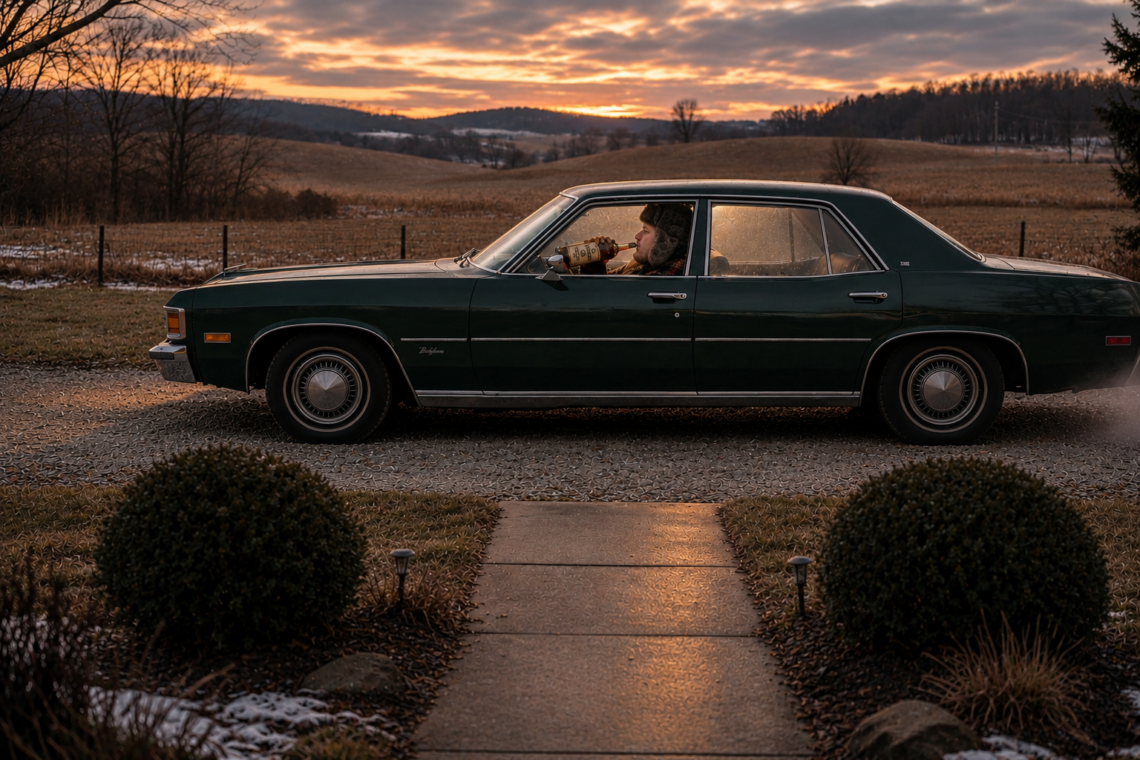
I saw my grandfather sitting in his car.
Not driving.
Not backing out.
Just sitting there in the driveway, with the engine running and the windows rolled tight and fogged up. That meant the heater no doubt set on “blowtorch.”
He was wearing what appeared to be every winter garment he owned. A tweed coat. A striped sweater. A plaid shirt. His hat belonged in another decade and probably Siberia. The ear flaps were in the lowered position. His clothing colors and patterns clashed in a way that suggested he had dressed without the guidance of my grandmother. And then took it a step further as a declaration of war.
In his hand was a bottle of Captain Apple Jack Brandy.
I assumed he was warming up the car. Farmers do that. They believe engines need encouragement in winter. I thought he’d be heading somewhere shortly. Maybe he was going to town. Or maybe he was on a mysterious errand known only to men of acreage. But it did seem strange to me that he would have a nip of Apple Jack before the journey.
Thirty minutes later, he was still there. He had turned the car off. All the windows were still closed. Shortly thereafter, he started the car again, and turned on the radio. Took another sip and continued to sit looking blankly through the windshield.
Now, I was taught never to interrupt a conversation. But in my family, conversations never stopped long enough for that rule to be practical.
As a child, I once kept asking a group of adults questions while they were looking through a photo album that contained pictures of my great-grandfather. I had never seen him before and wanted to know where he was and what had happened to him. After ignoring my questions for quite a while, one of my uncles finally snapped, “A bear ate him. Now be quiet.”
I believed him completely. I walked away stunned and later repeated the story to various people as though it were established family history. I continued believing it until I was nineteen years old and happened to see my great-grandfather’s death certificate.
So in a family like mine, it took effort to interrupt anything.
That evening, I finally raised my voice loud enough to get everyone’s attention. The conversations stopped.
I pointed toward the driveway and asked what in the world was going on out there.
“He’s sweating out a cold,” someone said calmly, as if this were a recognized medical specialty.
No one in the room seemed to find this unusual.
Apparently, when my grandfather felt under the weather, he employed what can only be described as a one-man sauna-and-spirits protocol.
He layered up in winter clothing. Then he got into the car and rolled the windows up tight. He turned the heater on high and sipped brandy until he was thoroughly soaked. Then he came inside, took a hot shower, and went to bed.
In essence, my grandfather’s car was also a rolling sweat lodge.
I imagined the smell — hot upholstery, apple brandy, and wool garments beginning to steam.

When he finally came in that evening, I nearly betrayed myself with laughter. His coat was damp. His hat was askew. The first clothing layers of plaid and stripes had merged into a humid tapestry. He looked like a man who had wrestled the weather and lost…but with dignity. He appeared satisfied!
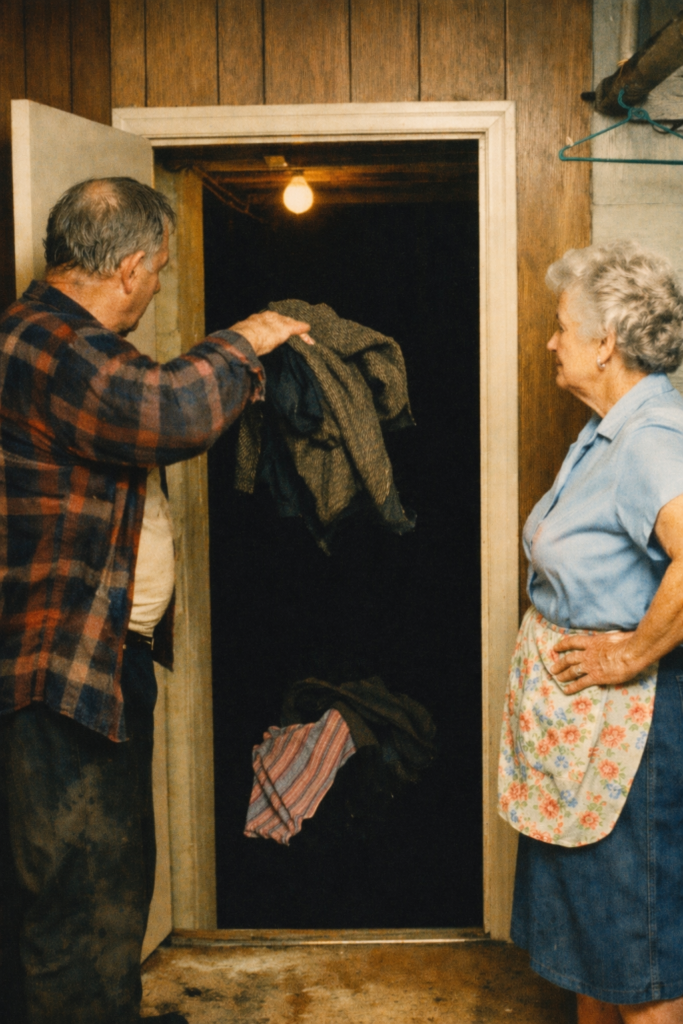
My grandmother met him at the side door. She took his hat and coat and left them on the screen porch. He peeled off the top two layers of shirts and hurled them down the basement steps to the laundry area. The dress shirt and T-shirt underneath were soaked. He took those off and tossed them down the steps as well. Grandma shut the basement door as if the hounds of Hell were on the other side.
Then he headed back to take a shower.
That was the last most of us saw of him until breakfast the next morning. There, he was seated at the head of the table and enjoying his sausage and eggs. Once he had enough of an audience, he pounded a fist on the table and announced, “Completely cured!”
Some congratulated him. Others rolled their eyes.
I, who was perhaps his biggest fan, was amazed at his ingenuity.
Today, as a woman who has survived multiple decades of winter viruses, I can say with confidence that sweating does not push rhinoviruses out through the pores.
Viruses are not persuaded by plaid.
They are not intimidated by heater vents.
And they show no particular fear of apple brandy.
What actually happens is far less dramatic. A virus enters. The immune system quietly does its work. A week later, the cold leaves on its own schedule. Whether you fought it from a sofa or the front seat of a sedan.
But here is the thing: heat can make you feel better. Warmth loosens congestion. A hot shower relaxes aching muscles. Alcohol makes you feel warmer still and sleepy. It also dries you out and does your immune system no favors. After an hour of sitting in a rolling boil of your own making, exhaustion will overtake even the most stubborn farmer.
He probably slept hard that night.
And by morning — because that is how colds behave — he likely felt somewhat improved.
Cause and effect were sealed in his mind as tightly as those car windows.
What fascinates me now is not whether it worked. It’s that he believed it did.
He did not measure his temperature or go to a pharmacy. He did not visit a doctor. He could have easily arranged a house call because the local doctor lived not two miles away. He mounted a counteroffensive.
There is something deeply American about that type of medicine—rural, self-contained, and stubbornly confident.
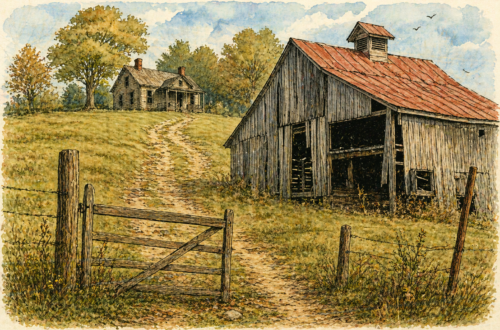
If illness came onto his hundred acres, it would be handled on-site.
The car became his steam tent. The brandy, his medicinal tincture. The heater, his obedient assistant. He sat there at dusk like a man engaged in serious negotiations with nature.
While listening to Paul Harvey’s News and Comment.
And nature, being unimpressed by his efforts but punctual, eventually withdrew on its own timetable.
Would I recommend this as a modern treatment? No.
There are hazards to running engines, to dehydration, to alcohol. Science has gently but firmly moved us toward rest, fluids, humid air, and patience.
But I would not trade the memory.
The winter sky. The idling car.
The silhouette of a plaid-clad man through slightly fogged glass.
I watched him that evening not knowing I was witnessing folklore medicine in action — the kind passed down without paperwork, supported by anecdote, and strengthened by repetition.
For years afterward, whenever he said he was “coming down with something,” I half expected to hear the car start.
And as far as he was concerned, he won every time.
© 2026 Terry Housel. All rights reserved.
This work may not be reproduced, distributed, or transmitted in any form without prior written permission from the author, except for brief quotations in reviews or scholarly works.