Cabernet Franc – The Thinking Person’s Red Wine
What Cabernet Franc Really Is
Cabernet Franc shares structure and seriousness with Cabernet Sauvignon, but it rarely carries the same weight. Instead, it leans toward elegance—lighter on its feet, more aromatic, and often more revealing of where it was grown.
If Cabernet Sauvignon is the performance, Cabernet Franc is the conversation.
Aroma First, Power Second
Cabernet Franc is defined less by force and more by lift—its signature is aromatic complexity carried by fresh acidity.
Typical profile:
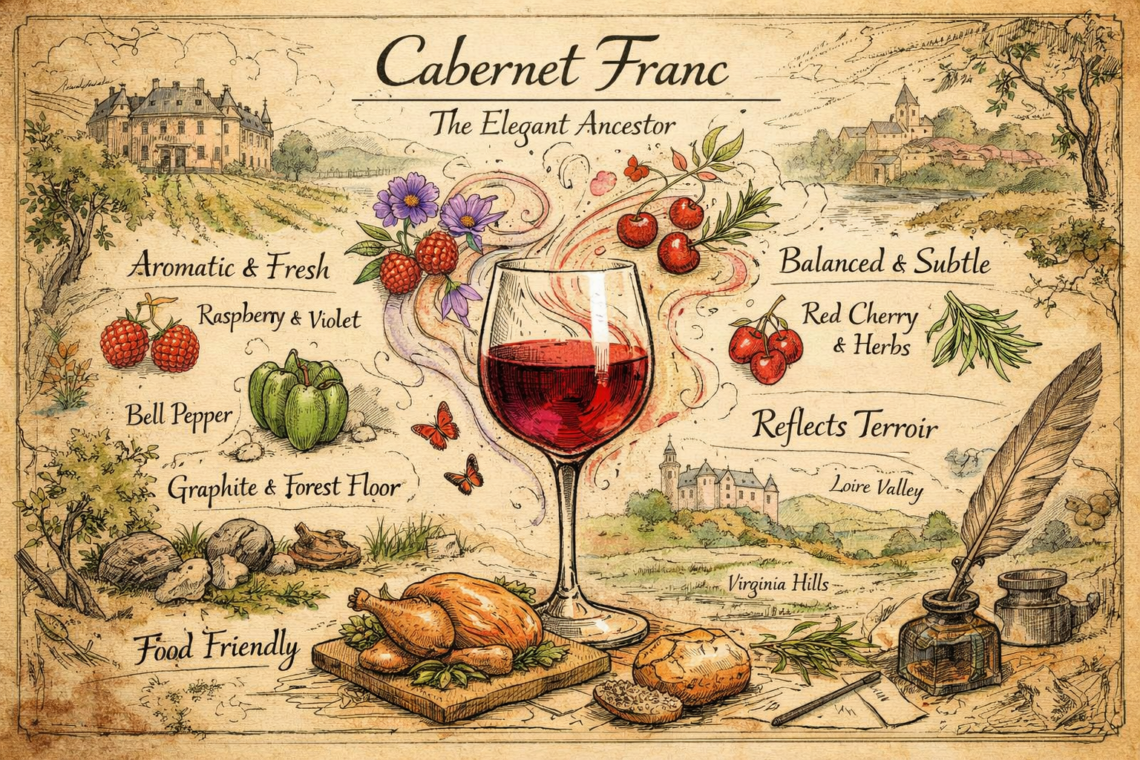
- Fruit: raspberry, red cherry, plum
- Herbal: bell pepper, tobacco, dried herbs
- Floral: violet
- Earthy: graphite, forest floor
That recognizable “green” note comes from compounds called pyrazines. In well-made wines, it reads as fresh and savory—not sharp or unripe.
A True Terroir Grape
Cabernet Franc is one of the clearest translators of place.
- Loire Valley (Chinon, Bourgueil): light, earthy, mineral-driven
- Bordeaux: used in blends to add lift and aromatic finesse
- Virginia: ripe fruit balanced by bright acidity—one of its most promising modern expressions
This is a grape that tells you where it came from, if you’re willing to listen.
Why It Belongs at the Table
Cabernet Franc is one of the most food-friendly red wines you can pour.
Because of its moderate tannins and natural acidity, it adapts rather than dominates.
It shines with:
- Roasted chicken, pork, lamb
- Herb-driven dishes (thyme, rosemary, sage)
- Tomato-based foods
- Meals that overwhelm heavier reds
If Cabernet Sauvignon feels too heavy, Cabernet Franc often fits.
Structure Without Weight
Compared to Cabernet Sauvignon, Cabernet Franc is generally:
- Medium-bodied
- Moderate tannins
- Medium–high acidity
- Moderate alcohol
The result is a wine that is easier to drink, approachable young, and still capable of aging.
Why Climate Matters
Cabernet Franc is highly sensitive to ripeness.
- Too cool → sharp, overly green
- Just right → fresh, complex, balanced
- Too warm → loses its identity, becomes soft and generic
Virginia sits in a compelling middle ground:
warm enough to ripen, cool enough to preserve acidity.
The Insider Takeaway
If you remember one thing, make it this: Cabernet Franc is the thinking person’s red wine—less about power, more about nuance, balance, and place.
How to Recognize a Good One
When tasting, look for:
✔ Bright, lifted aroma
✔ Fresh red fruit with integrated herbal notes
✔ Smooth, balanced tannins
✔ A clean, slightly savory finish
Warning signs:
- Harsh green pepper → under-ripe
- Flat, jammy fruit → overripe
Perhaps that is why Cabernet Franc inspires such loyalty among those who come to know it well. It does not rely on sheer size or concentration to make its impression. Instead, it rewards attention. The more carefully you taste it, the more it reveals—about climate, soil, vintage, and restraint. In a world where many wines compete to be bigger, darker, and louder, Cabernet Franc often succeeds by doing something rarer: remaining thoughtful enough to let the vineyard speak for itself.