The Day Chambourcin Answered the Question
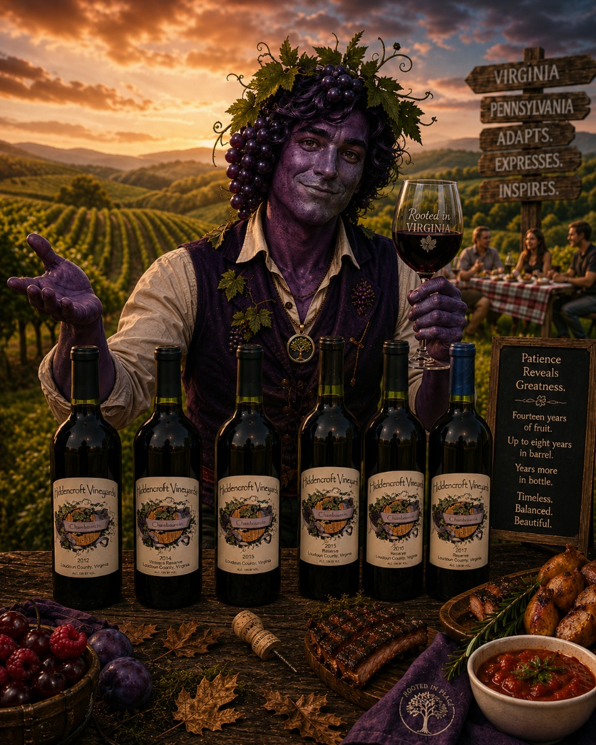
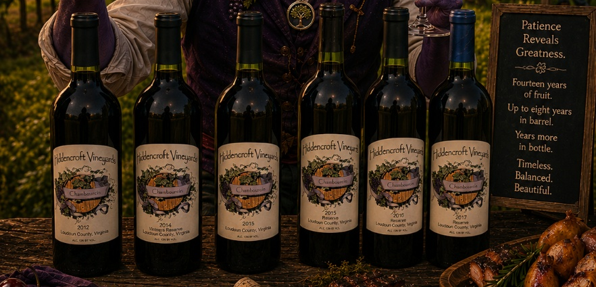
On a warm June afternoon in 2026, six bottles were placed on a tasting table at Hiddencroft Vineyards. There was nothing particularly unusual about the bottles themselves. No elaborate labels. No grand proclamations. No promises.
Just six Chambourcin wines: 2012, 2014, 2015, 2015 Reserve, 2016, and 2017.
The oldest fruit had been harvested fourteen years earlier.
Each wine had spent between four and eight years in barrel before spending additional years in bottle.
By modern standards, such treatment borders on neglect. Most wineries would have released the wines years earlier. Most consumers would assume that so much time would surely diminish them.
But wine has a way of ignoring assumptions.
As the corks were pulled and the glasses filled, the years seemed to collapse upon themselves.
The wines did not appear tired. They did not appear fragile. They did not appear to be survivors clinging to the last traces of life.
Instead, they appeared comfortable, at home, confident.
The colors remained vibrant. The aromas remained clean. The structures remained intact. Acidity carried each wine across the palate with purpose and balance. No bottle showed oxidation. No bottle showed fatigue. No bottle carried the unpleasant aromas that often accompany wines that have exceeded their limits.
The differences between them were subtle. One offered slightly more fruit. Another showed slightly more dryness. A third revealed a brighter line of acidity; but these were variations on a theme rather than signs of decline. The remarkable thing was not how different the wines had become. It was how beautifully they had endured.
For decades, Chambourcin has often been discussed as though it were merely a capable regional grape. Pleasant. Productive. Useful. Yet sitting at that table were six pieces of evidence suggesting much more.
Chambourcin’s greatest gift is not its color. Not its fruit. Not even its adaptability.
Perhaps its greatest gift is patience.
The grape naturally carries an acidity that many red vinifera varieties spend their lives trying to preserve. That acidity acts like a backbone. It supports wine through years of barrel aging and years of bottle aging. While fruit slowly evolves and tannins soften, the acidity remains, carrying freshness forward through time.
On that afternoon, the wines seemed to speak with one voice.
Not loudly.
Not boastful.
Simply and clearly.
“We are not finished yet.”
The tasting answered a question that had been forming at Hiddencroft for many years.
When the winery first began ageing wines in barrel longer than convention suggested, nobody knew exactly where the journey would lead. Curiosity played a role. Necessity played a role. Patience certainly played a role.
But certainty did not.
The answer arrived not in a laboratory, nor in a textbook, nor in a marketing plan.
It arrived in six glasses.
The answer was that Chambourcin can age.
Not merely survive.
Not merely endure.
Age.
Gracefully.
The wines of Tuscany taught the world that Sangiovese rewards patience. The wines of Rioja taught the world that Tempranillo rewards patience.
On this June afternoon in Virginia, six Chambourcin wines quietly suggested that patience may have found another willing partner.
And perhaps that is the most remarkable discovery of all.
The wines were never trying to become something else.
They were simply becoming older versions of themselves.
And they were doing so beautifully.
Learn More about Hiddencroft Vineyards’ Extended Barrel Aging Philosophy