Springhouse Revival: From Butter Theft to Barrel Tables
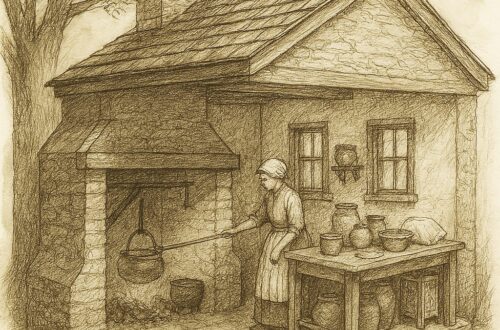
This springhouse was once a vital part of the Compher farm. Its ground floor provided clean water and natural refrigeration for milk, cheese, butter, and eggs. The upper floor was used for butter churning, cheesemaking, and equipment storage. It’s the same one that played a central role in the infamous August 1876 butter theft—a story passed down through history via the Farm Ledger the Compher family kept.
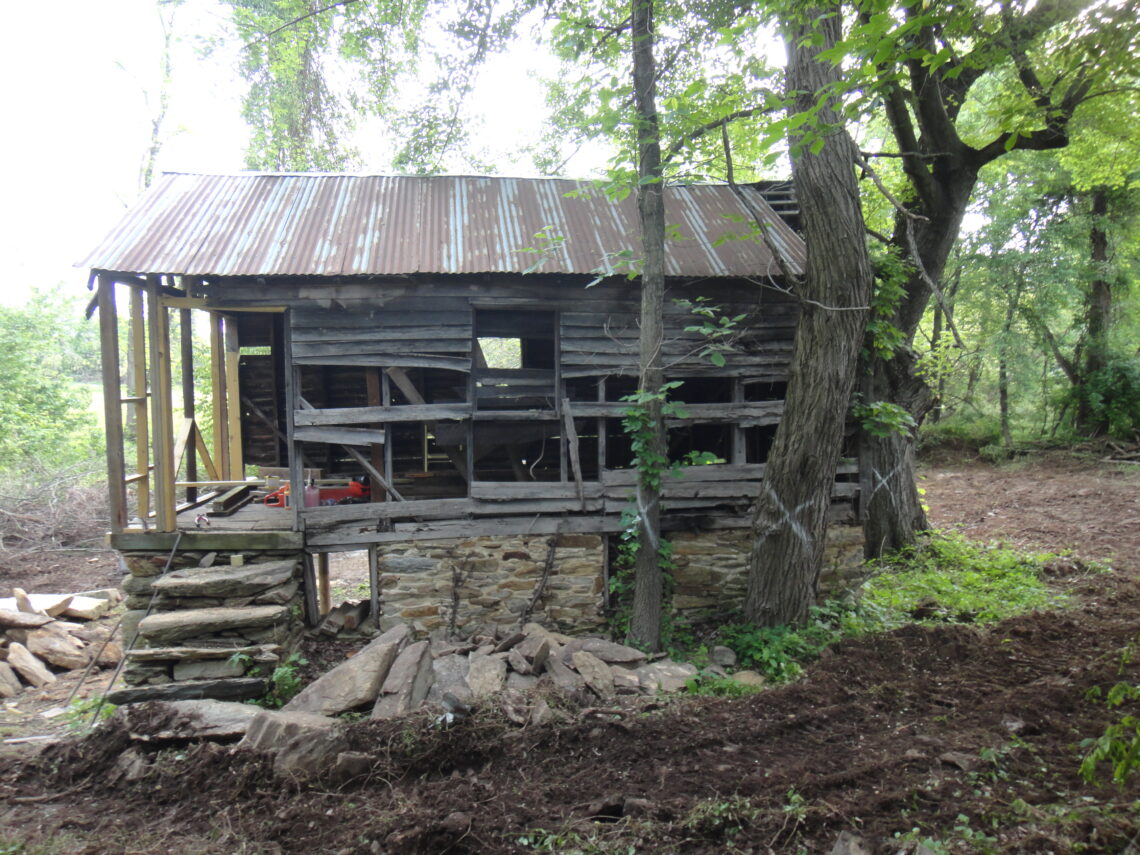
By 2014, time had taken its toll. The springhouse was collapsing. One stone wall leaned dangerously, Siding had rotted, and the roof sagged under a tree limb. Inside the upper floor a tree had actually grown up through the structure. I braced the wall with posts, supported the upper floor with beams, and anchored the framing with a chain to a nearby tree. I used a come-along to winch the leaning top of the building to a more upright position. I did this just before Winter set in, hoping to buy enough time for a permanent fix.

Original Springhouse after temporary supports and straightening of framework
A few weeks later, luck—or perhaps fate—intervened. While chatting with a winery guest, I mentioned the old springhouse. As it turned out, he was a stonemason. We shook hands on the spot and sketched out a plan. He rebuilt the damaged wall using the original stones and sourced the rest from piles hidden in the woods.

Stonewall partially rebuilt
Once the wall stood firm, I tackled the timberwork. I jacked up the roof with post jacks and swapped out the rotted 6×6 joist header that supported the upper stud walls. Then I added new studs, sill plates, and cross beams at regular intervals. This stabilized the frame and allowed me to remove the makeshift supports.
The roof posed its own challenge. The original trusses had rotted at the eaves, so I sistered new 2×6 rafters onto them, extending the drip line. Then I installed steel roofing, fresh cedar siding, and period-style windows and doors that restored the building’s charm.
Inside, the transformation continued. The original interior was uninsulated and exposed, so I rewired it, added insulation, and lined the walls with vertical cedar siding. A beadboard ceiling went in, with exposed beams stained to match the weathered originals. The cracked and warped threshing floor was sealed with tar paper, then topped with stained oak fence boards designed to resemble century-old planks—goodbye spiders and snakes.
Final Reflection
Now, the upstairs welcomes guests with glass-topped barrel tables and vintage chairs, while a ductless mini-split system keeps it comfortable year-round. Downstairs, the cooling trough still flows with spring water, a living tribute to its original purpose.
At Hiddencroft Vineyards, we’ve done more than preserve history—we’ve brought it back to life. Our 1800s outbuildings don’t just recall the past; they serve the present. What once cooled butter and sheltered smoked meats now holds stories, laughter, and the kind of comfort that bridges centuries.

© 2025 Clyde Housel. All rights reserved.
This work may not be reproduced, distributed, or transmitted in any form without prior written permission from the author, except for brief quotations in reviews or scholarly works.