Clint Dimbrel’s Window of Opportunity
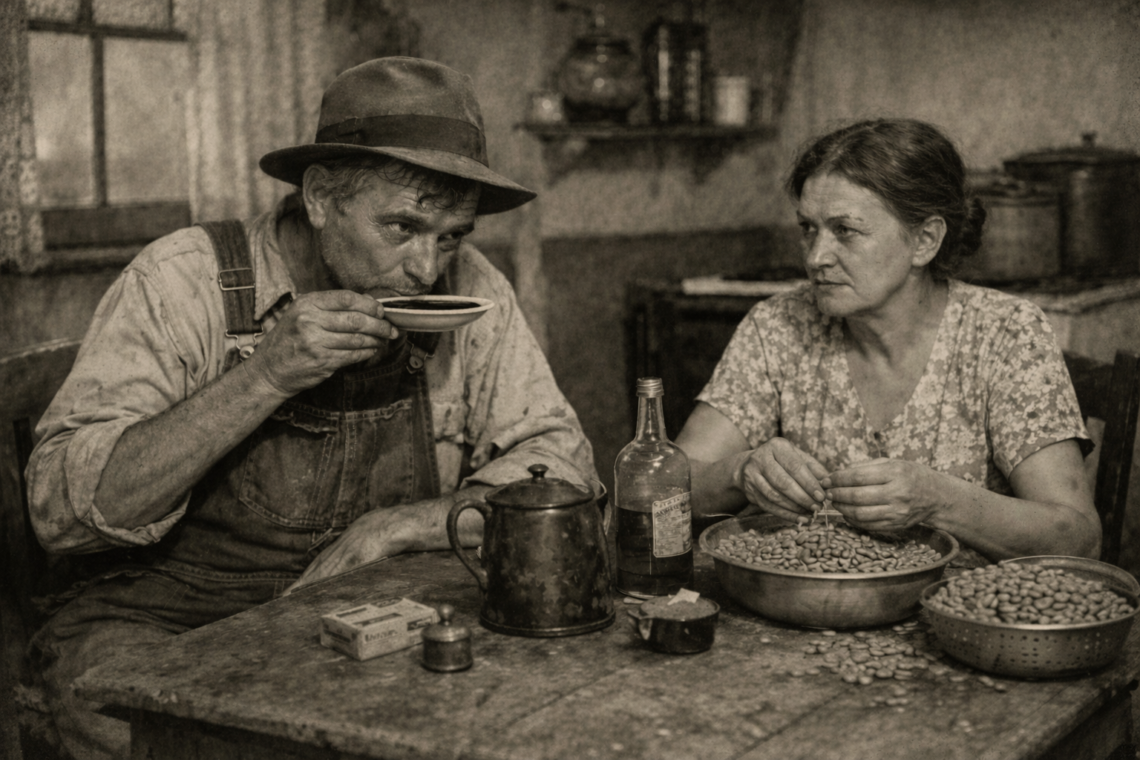
Clint Dimbrel wasn’t the kind of man you’d call refined. Unless you were talking about moonshine, cheap motor oil, or the stories he’d polish up after a few drinks and a long sit at somebody else’s kitchen table. That’s exactly where I found him one August evening, parked like a big rusty Studebaker in my mom’s kitchen. He slouched in her wobbly cane-bottom chair, one overall strap hanging loose like a broken porch swing, and sipping his coffee from a saucer like it was high art.
“I tell you, Vera,” he said between slow slurps, “if it weren’t for that danged window and them caskets, I might’ve gone on to live a perfectly respectable life.”
This was Clint’s way of saying anything but respectable had happened. That meant it was time to settle in.
He adjusted himself with a grunt — the way a man does when he’s about to lay down some prime fertilizer — and looked right at me like I was his court-appointed audience.
“It was Lenny Riggle’s idea, naturally,” Clint started. “Nobody ever said Lenny had more sense than a sack of onions, but he had what you might call ambition. Big dreams. Small brains.”
According to Clint, Lenny had cooked up a foolproof plan to rob the undertaker’s office in the next town over. It was a grim little outfit that sold caskets up front and did embalming in the back. Lenny thought it was the perfect cover for keeping cash on hand.
“People dying left and right back then,” Clint explained. “Good for business. Bad for morals.”
Their grand scheme involved slipping in through the side window — a feat requiring more nimbleness than either of them possessed — and then creeping through the display room without disturbing the… uh… merchandise.
“You ever crawl over fourteen caskets in the dead of night, Vera?” Cline asked, squinting at her like she might have.
“No,” she answered flatly, not even looking up from shelling beans.
“Well let me tell you,” Clint said, setting his saucer down for emphasis, “that there’s a mighty humbling experience. Caskets is slick. Got that polished finish. And every move I made, I was sure one of ‘em was gonna open up and ask what the hell I thought I was doing.”

Naturally, the “silent alarm” they never believed existed did its job, and the two of them didn’t make it past the second drawer of the undertaker’s desk before the law arrived like Brethrens at a potluck.
Clint sighed. “In 1931 the judge give me five to ten years in the Western State Pen. Said I was lucky not to get more, being that I was crawlin’ around disrespectin’ the dead.”
That’s when he squinted at me with his milky, watery eyes and pointed like I oughta take notes.
“You wanna know what really got me though?” he asked. “License plates.”
He nodded solemnly. “Days on end, pressin’ numbers into metal till I was seein’ ‘em in my sleep. Wrecked my eyes but good. I can still see ‘em sometimes — 48-212, 48-213…” His voice trailed off like some old factory machine winding down.
Mom snorted. “Wasn’t the license plates, Clint. It was them five gallons of homemade applejack you drank every Christmas.”
Clint waved a hand. “Details, Vera. Ain’t no need to get personal.”
Then, as if the whole business had only mildly inconvenienced him, he picked up that saucer and took another long, loud sip — pinky cocked out just a little for style.
And I sat there — memorizing every word — knowing full well I’d just heard one of the greatest cautionary tales in my home town’s history.
Not about crime. Not about punishment.
About never, ever, crawling across caskets unless you absolutely had to.
© 2026 Clyde Housel. All rights reserved.
This work may not be reproduced, distributed, or transmitted in any form without prior written permission from the author, except for brief quotations in reviews or scholarly works.