Spring 2026 Vineyard Plan
Given the weather conditions here in Northern Virginia during late January and early February 2026 we are likely looking at a spring that’s more about “what survived winter + what reserves are left” than about “normal” budbreak momentum. The good news: long, cold winters are often less damaging to vines than “warm–cold–warm” whiplash—as long as we didn’t hit truly extreme lows for our varieties and the vines were well-acclimated.
Here’s what we expect and what we will do about it.
1) Winter conditions: what they usually do to grapevines
What could show up this spring
- Delayed, uneven budbreak: Cold soil under persistent snow/ice keeps roots quiet longer, so budbreak can be later and more staggered than usual.
- Cane/bud desiccation (“winter burn”): High wind + low humidity + frozen conditions can dry out exposed canes and buds, especially on higher trellis wires.
- Mechanical damage: Ice plus wind can cause rubbing/abrasion where canes or cordons contact wires; occasionally you’ll see bark scuffing or split tissues on stressed wood.
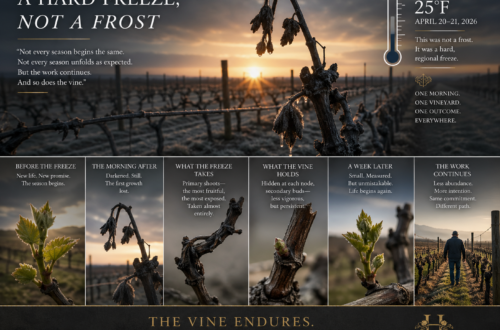
- Primary bud loss in the most exposed spots: We’ve had very low actual temperatures (not just wind chill), primary buds could be injured—then we will rely more on secondary buds, which typically means lower yield and sometimes less-uniform clusters.
The D.C./Northern VA region has been in an unusually persistent cold pattern since late January, with damaging-wind events layered on top. This trend broke on February 10th.
2) Spotted lanternfly (SLF) in 2025: what that means for 2026 vine performance
SLF feeding in summer/fall matters because it can reduce:
- Photosynthesis late season
- Carbohydrate storage (the vine’s “battery” for spring push)
- Overall vine vigor going into dormancy
So in spring 2025, the infestation was heavy and prolonged, so we may see:
- Weaker shoot growth early (shorter internodes, thinner shoots)
- More variability vine-to-vine
- Potentially smaller crop potential if last year’s stress affected bud fruitfulness formation
3) Will this cold winter “kill off” SLF?
It may help a bit, but we don’t count on it as a reset.
SLF adults die each winter, but the population overwinters as egg masses. Virginia Tech and VDACS guidance still emphasizes egg mass scouting and destruction through winter/early spring—because eggs commonly survive typical winters.
What can reduce eggs:
- Exposure + desiccation (not sheltered under bark/crevices)
- Very cold events (especially if egg masses are exposed)
What can protect eggs:
- Sheltered placement (crevices, under loose bark, protected surfaces)
- Snow cover moderating extremes (snow can insulate)
Bottom line: we expect SLF again, but plan to knock the first wave down with strong late-winter/early-spring egg work and tight nymph/adult timing later.
4) Practical spring assessment plan (vineyard-first, not guesswork)
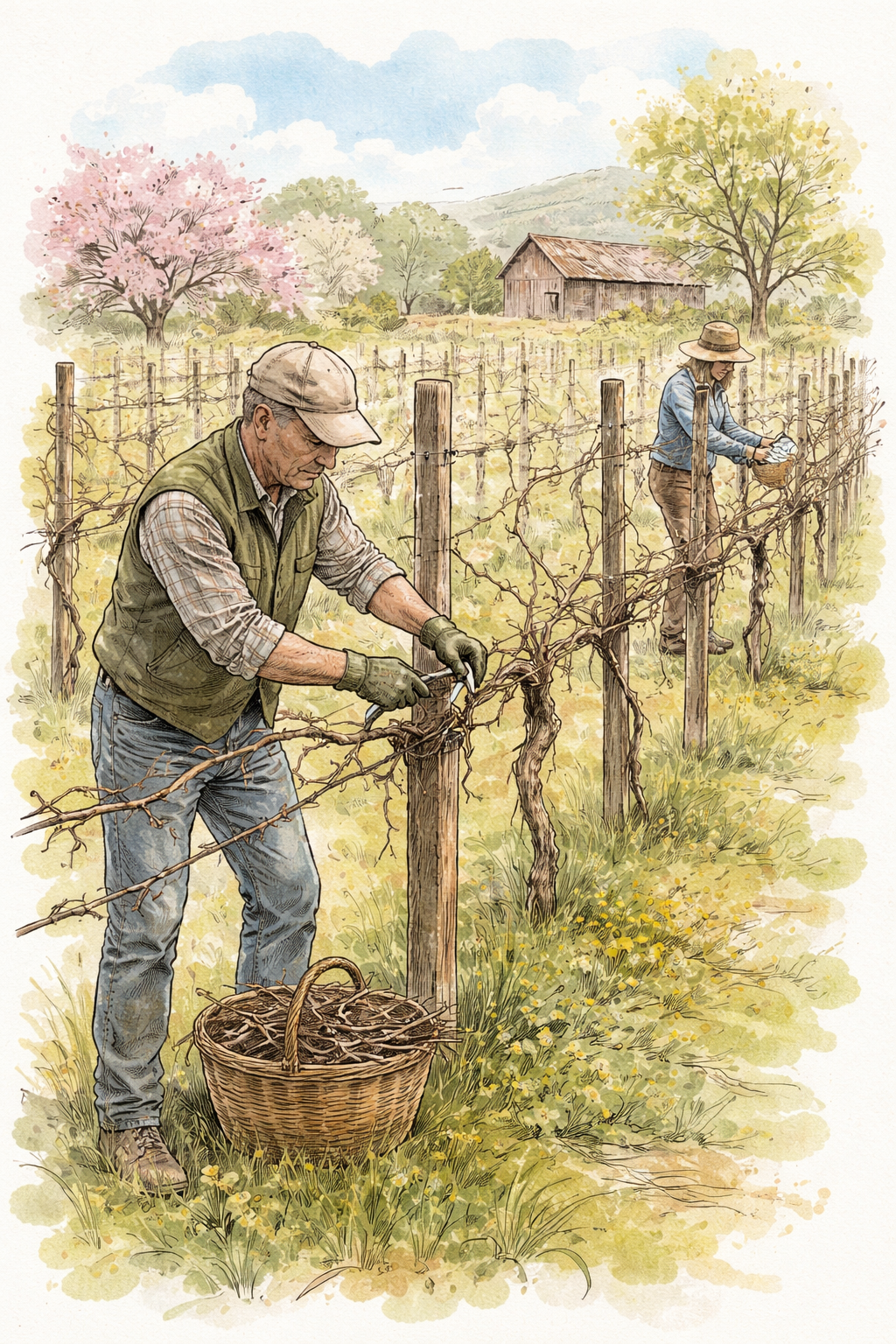
A. Delay final pruning (or “two-pass prune”)
If we can, we will do a rough pass now and finish closer to bud swell. That keeps options open if we discover bud loss. (This is one of the simplest “insurance policies” after hard winters.)
B. Do a bud mortality check before we set bud counts
Pick representative canes from:
- windy edges
- low spots
- blocks hit hardest by SLF
Dissect buds (razor blade) and look for green vs. brown/black tissue. If primary buds are damaged, leave more nodes to compensate.
C. Check cane and cordon viability
- Scratch test on canes/cordons (green cambium = alive; brown/gray = dead)
- Watch for cordon/trunk cracks that may become entry points for disease later.
D. Adjust season strategy based on what we find
- If buds are mostly good: normal pruning targets, but expect later start.
- If primary bud loss is moderate: leave extra nodes; plan for lighter yield.
- If wood damage is patchy: prioritize renewal wood and avoid forcing weak cordons to carry a full crop.
5) SLF spring actions that actually move the needle
From Virginia Tech/Virginia guidance:
- Now through early spring: search for and destroy egg masses; dormant oil can be used as a targeted egg-mass treatment when temps allow (follow label and timing guidance).
- Mid-April into summer: monitor for nymphs; treat when they’re present and before the adult surge builds (timing matters more than “spray volume”).
If tree-of-heaven is nearby (a favored host), manage it (where feasible) and focusing edge pressure can reduce influx.
What we’re expecting for our vineyard this spring
- Budbreak later than “normal Northern VA springs,” and possibly uneven at first because of cold soils and the long frozen stretch.
- Some winter edge effects (desiccation/abrasion) in the windiest rows.
- Vigor variability depending on how hard SLF hit particular blocks in late summer/fall 2025.
- SLF will likely still be present, but we have a real chance to reduce the first generation with egg mass work and early monitoring.
What to expect by variety (Northern VA)
Most likely to look fine (if trunks/cordons are healthy)
- Chambourcin – generally a good “survivor” in VA winters. If anything shows up, it’s more likely cane desiccation on exposed wood than catastrophic bud loss.
- Cabernet Franc – among vinifera, one of the more winter-tolerant. Still can show primary bud loss in exposed rows, but usually manages.
The “watch these closely” group
- Traminette – typically pretty cold-hardy as a vine, but can still show uneven budbreak after long frozen soil periods and can be sensitive to stress carryover (last season’s feeding pressure).
- Tannat – tends to be less winter-hardy than CF; if you had any true low-temperature events, this is a variety where you can see primary bud injury and slower spring push.
- Petit Verdot – usually the most winter-tender of your list. PV often has the highest risk of primary bud loss and cane/trunk injury in tough winters (especially with wind exposure).
If something is going to look rough this spring, PV first, then Tannat, then (maybe) Traminette, with Cab Franc and Chambourcin usually the steadiest.
What SLF pressure last summer changes for spring 2026
Heavy SLF feeding can reduce the vine’s stored carbohydrates. In spring, that can look like:
- shorter, weaker early shoots
- more blind nodes / fewer strong basal shoots
- bigger differences vine-to-vine (especially in blocks that were hit hardest)
So even if buds are alive, some vines may “wake up tired.”
Smartest move now: prune like we’re gathering evidence
1) Two-pass pruning (especially for PV + Tannat)
- First pass now: remove obvious junk and leave extra length.
- Final pass closer to bud swell: set your real bud count after you’ve done bud cuts.
This keeps options open if we discover mortality.
2) Do bud cut counts before we decide node numbers
Pick canes from:
- windy edges/top rows
- low spots
- the blocks you know were worst for SLF
For each variety/block, cut 50–100 buds total (enough to be meaningful). Look for:
- green = alive
- brown/black = dead (or partly dead)
Then adjust pruning:
- If primary bud mortality is low (say, <10–15%): prune normally.
- If moderate (15–30%): leave extra nodes.
- If high (>30%): plan for replacement wood / renewal and accept a likely yield hit.
3) Check cordons/trunks in PV and Tannat
Scratch test cambium on suspect wood. Also look for:
- splits/cracks
- dead spur positions
- weak cordon sections
If you see patchy damage, prioritize rebuilding over forcing production.
What spring will likely look like on the ground
- Budbreak later than our average year, and possibly staggered (frozen soils + prolonged cold).
- More “edge effect”: wind-exposed rows showing weaker push or more dead spurs.
- PV and Tannat may require more “triage pruning” and cordon renewal.
- Even in good blocks, expect a season that starts slower but can catch up if spring warms steadily.
Early-season practices that help recovery
- Be conservative with early crop load, especially PV/Tannat if shoots look thin.
- Make sure vines have balanced nutrition (not just nitrogen; also K/Mg status matters). If you do petiole/soil testing, this is a year it pays off.
- Keep an eye on trunk disease entry points: winter-injured wood + spring rains can be a setup. Clean cuts and good sanitation matter more this year.
SLF: best spring leverage
Winter won’t reliably “erase” SLF because eggs overwinter. The practical win is:
- Egg mass scouting/scraping now through early spring (especially on posts, equipment, nearby trees, and vineyard edges)
- Tight monitoring when nymphs appear, so we can hit them before adult pressure builds again.
© 2026 Terry Housel. All rights reserved.
This work may not be reproduced, distributed, or transmitted in any form without prior written permission from the author, except for brief quotations in reviews or scholarly works.