Chambourcin – the American Storyteller
What Chambourcin Really Is
Chambourcin is not a traditional European grape—it is something more adaptable, more expressive, and uniquely suited to regions like Virginia. It is less about tradition and more about possibility. If Cabernet Sauvignon is legacy, Chambourcin is innovation.
Fruit Forward, Earth Anchored
Chambourcin balances bright fruit with earthy depth.
Typical profile:
- Fruit: cherry, raspberry, plum
- Earthy: forest floor, damp leaves
- Spice: pepper, herbal notes
- Color: deep, inky purple
It can range from light and bright to rich and structured, depending on how it is made.
A Grape of Adaptation
Chambourcin thrives where many traditional grapes struggle.
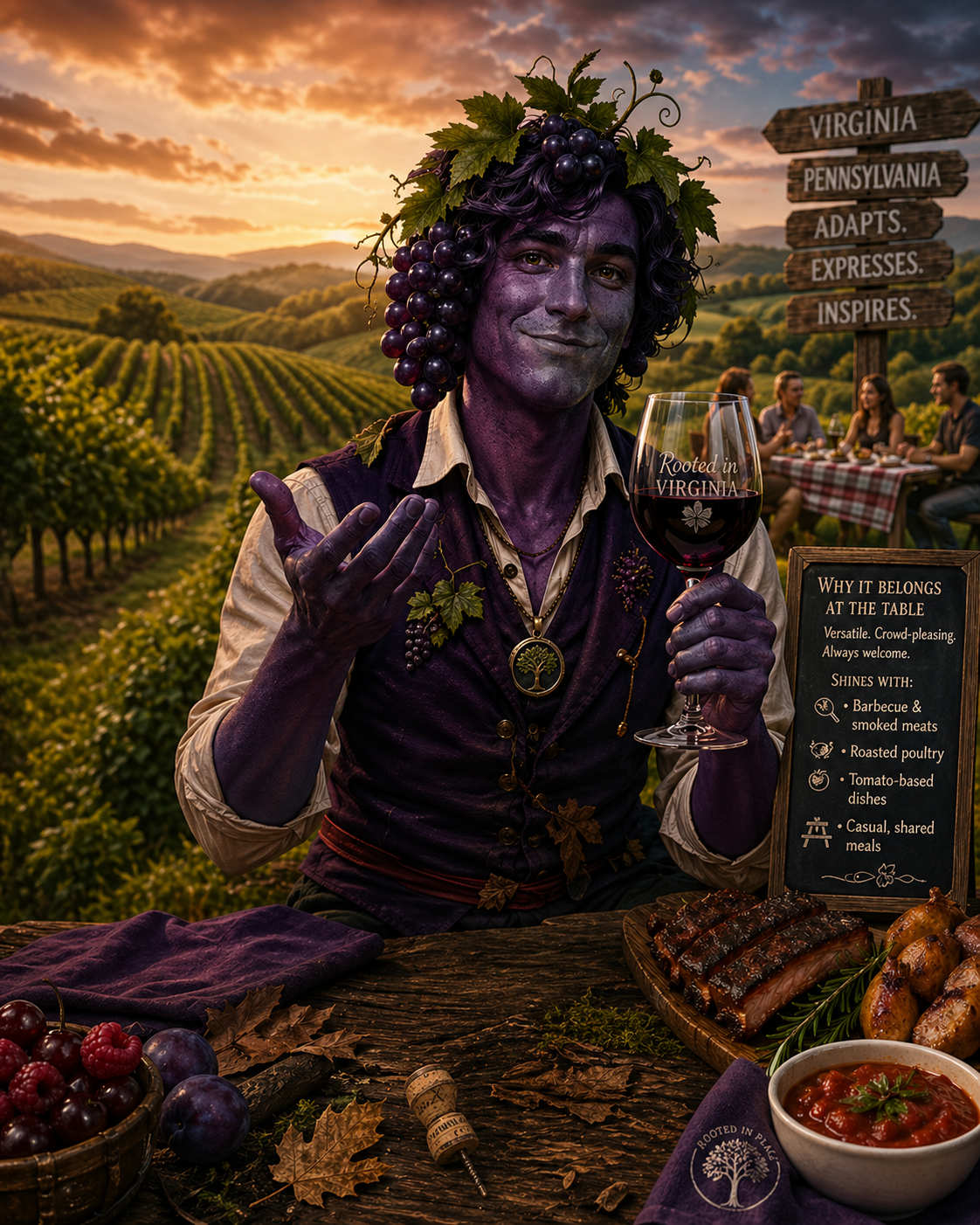
- Eastern U.S. (Virginia, Pennsylvania): expressive, balanced
- Cooler climates: retains acidity and freshness
It reflects both site and winemaking decisions more than strict tradition.
Why It Belongs at the Table
Chambourcin is highly versatile. Its balance of fruit and acidity makes it adaptable across many foods.
It shines with:
- Barbecue, smoked meats
- Roasted poultry
- Tomato-based dishes
- Casual, shared meals
It is as comfortable at a picnic table as it is at a tasting counter.
Flexible Structure
Chambourcin is typically:
- Medium-bodied
- Moderate tannins
- Medium acidity
- Moderate alcohol
The result is a wine that can be both approachable and expressive.
Why Climate Matters
Chambourcin is more forgiving than many grapes.
- Cooler climates → brighter, more acidic
- Warmer climates → richer, darker fruit
This flexibility makes it well-suited to Virginia’s variability.
The Insider Takeaway
If you remember one thing, make it this:
Chambourcin is the storyteller—adaptable, expressive, and rooted in place.
How to Recognize a Good One
✔ Bright fruit with underlying earth
✔ Balanced acidity
✔ Smooth, approachable tannins
✔ Depth without heaviness
Warning signs:
- Overly simple fruit → lacks structure
- Flat or dull profile → lacks acidity


You May Also Like
Cabernet Franc – the Thinking Person’s Red Wine
Feathery Autumn Dance