The Day Grandma Swore Off Eggs
How Mail-Order Chicks, Escaping Bees, and Wax Moth Larvae Turned Us Into Accidental Homesteaders
There are people who decide to raise chickens because they have carefully researched sustainable agriculture, nutrient cycles, and homesteading traditions.
And then there are people like us.
On what had once been part of the old Joseph Compher farm in western Loudoun County, we somehow drifted into chickens and honeybees the same way many rural adventures begin—with curiosity, optimism, and almost no understanding of what we were getting ourselves into.
At first the chickens seemed simple enough.
How hard could chickens possibly be?
The answer, it turns out, was: considerably harder than the feed-store brochures implied.
Like all beginners, we immediately became fascinated by breeds. Ordinary chickens no longer seemed adequate once we discovered that chickens apparently came with decorative options. Soon we were flipping through hatchery catalogues studying Buff Orpingtons, Araucana’s, Australorps, Plymouth Rocks, feather-footed varieties, and birds with enormous puffball crests that looked less like poultry and more like Victorian ladies wearing feather hats.
Ordering them through the mail somehow seemed perfectly normal.
This was one of the great rural contradictions of the late twentieth century: you could sit at your kitchen table in Virginia and order living creatures from a catalogue the same way other people ordered socks.
Then one spring morning the telephone would ring.
“Your chicks are here.”
And off you would go to the post office where an entire corner of the building sounded like a thousand squeaky dog toys all screaming at once.
The postal employees never looked entirely pleased about the arrangement.
The little boxes would be warm to the touch and full of frantic peeping life. You could smell pine shavings, chick feed, and that unmistakable dusty poultry smell before the box was even opened. Somewhere inside the post office, serious federal business involving registered mail and government documents was taking place while nearby several hundred baby chickens screamed for survival.
America is a complicated nation.
At nearly the same time we decided we should also keep honeybees.
Because apparently raising one species poorly was not ambitious enough.
The bees were ordered through the mail too, which in retrospect seems like the sort of thing that should have triggered additional federal oversight.
One afternoon, while at work, I received a hurried call from the post office.
“Your bees are here.”
There was a pause.
“And they’re getting out.”
No further explanation was really necessary.
I drove there imagining a biblical disaster unfolding in downtown Lovettsville.
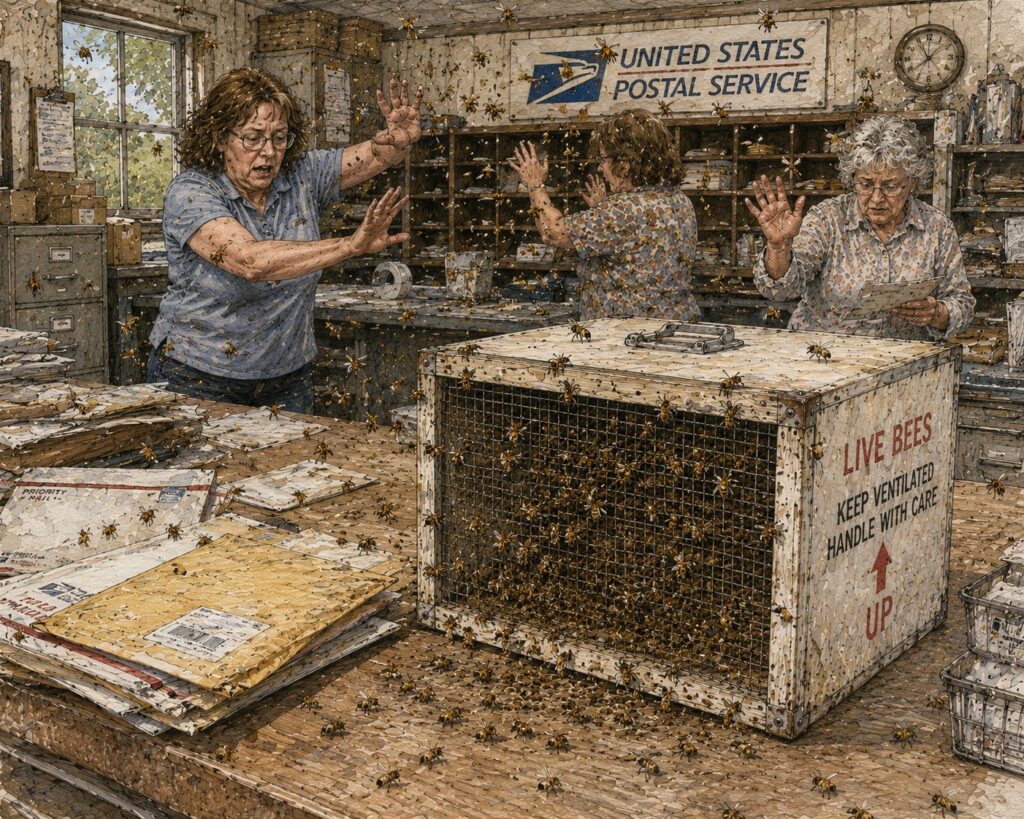
In my mind postal employees were diving beneath counters while enraged clouds of bees seized control of federal property.
The actual scene was slightly calmer, though not much.
A few bees had indeed escaped from the screened package and were investigating the fluorescent lights overhead while nervous postal workers attempted to maintain dignity under increasingly difficult circumstances. One employee slid the package toward me with the cautious respect normally reserved for unstable explosives.
I thanked them as though this sort of thing happened every day.
At home the chickens settled into routines while the bees established colonies in white wooden hives sitting out near the fields. The bees became a world unto themselves.
There were spring swarms hanging from tree limbs like living footballs.
There were frantic attempts to capture escaped colonies using ladders, cardboard boxes, old sheets, improvised equipment, and courage that exceeded common sense.
There was the first miraculous harvest of honey.
Nothing from a grocery store tastes remotely like warm fresh honey sliding out of newly opened comb. We would uncap the wax with a hot knife and suddenly the frames began to glow and ooze gold. Honey ran down our hands onto the table while the entire room filled with the smell of flowers and wax and summer itself.
For a brief moment we felt like highly competent agricultural people.
Then reality returned.
The bees faced mites. Yellow jackets. Colony collapse disorder. Wax moths. Mice. Strange unexplained die-offs. Entire hives could weaken mysteriously over winter until the once-busy colony stood silent except for a few doomed workers wandering slowly across empty comb.
Beekeeping, we learned, was equal parts farming, biology, weather forecasting, gambling, and heartbreak.
One summer we opened a weakened hive and discovered wax moth larvae had invaded the combs. The frames were webbed over with silky tunnels and crawling pale worms that looked like something dredged from the bottom of a bait bucket.
The infested frames had to be removed immediately.
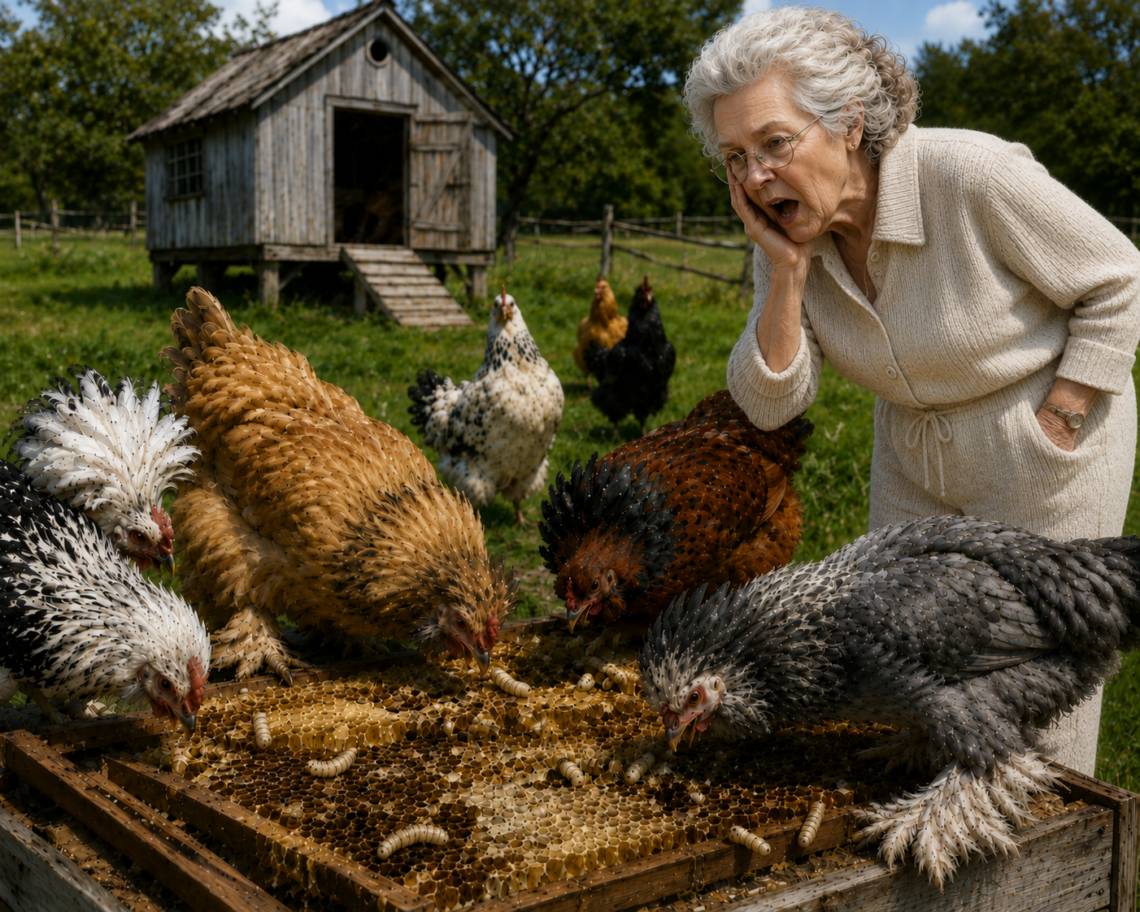
Rather than waste them, we carried the ruined combs over to the chickens.
And that was when the true nature of chickens revealed itself.
The same fluffy hens we had lovingly raised from adorable peeping chicks instantly transformed into feathered velociraptors.
They attacked the larvae with horrifying enthusiasm.
Worms disappeared in seconds.
Chickens leaped over one another in violent determination while bits of wax flew in every direction. The scene resembled less a peaceful farm and more a nature documentary filmed shortly before the narrator says, “What happens next may disturb some viewers.”
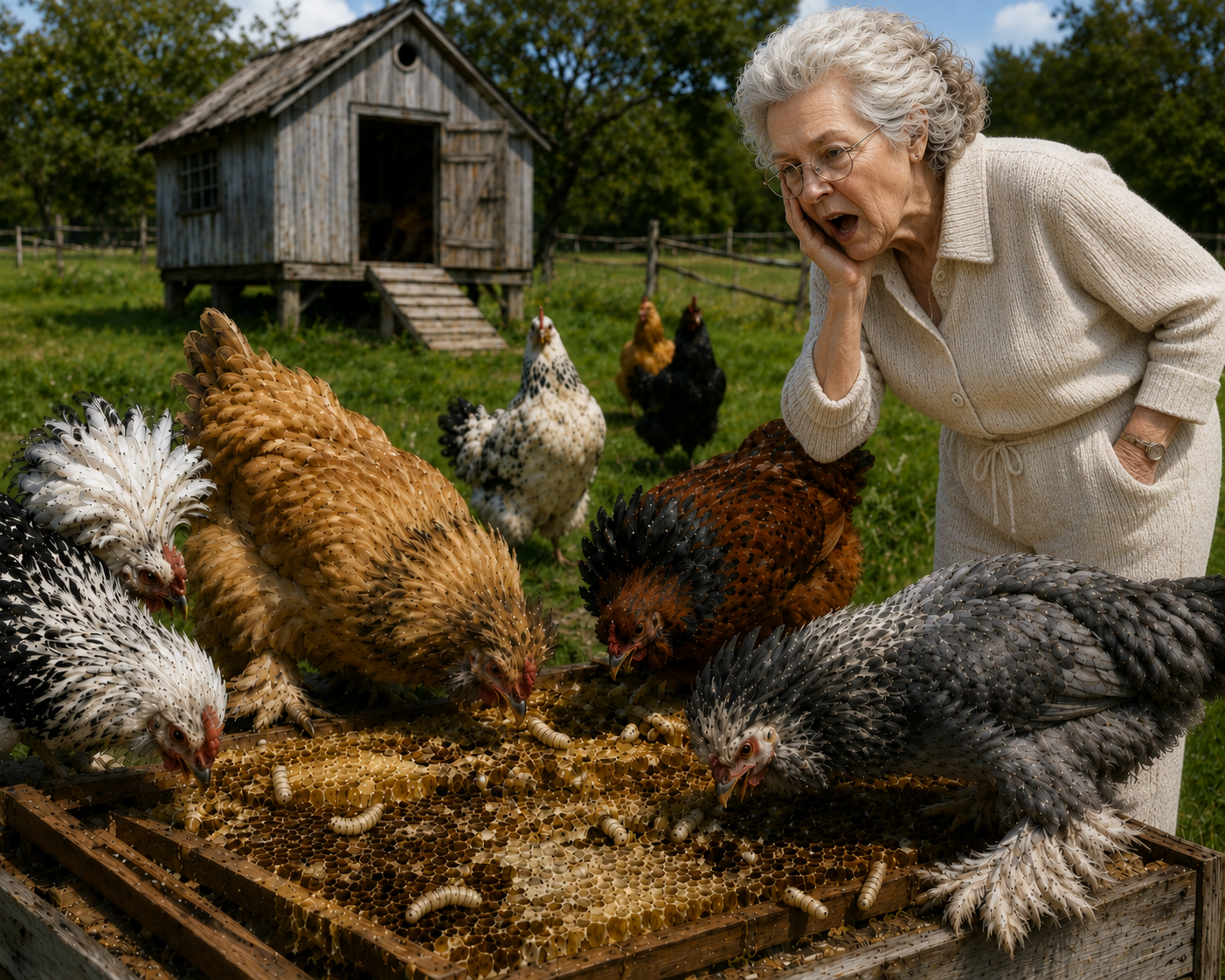
Standing nearby watching this spectacle was my elderly grandmother.
She had grown up around farms and had witnessed most things country life could produce. But even she seemed deeply unsettled by the sheer savagery of what she was seeing.
One chicken jerked a particularly large wax moth larva from the comb and swallowed it whole like spaghetti.
Grandmother stared silently for a long moment.
Then, with complete sincerity and visible revulsion, she announced:
“I’ll never eat another egg!”
And for a few seconds, standing there beside the old Compher fields while chickens devoured hive worms with prehistoric fury, I honestly thought she might mean it.