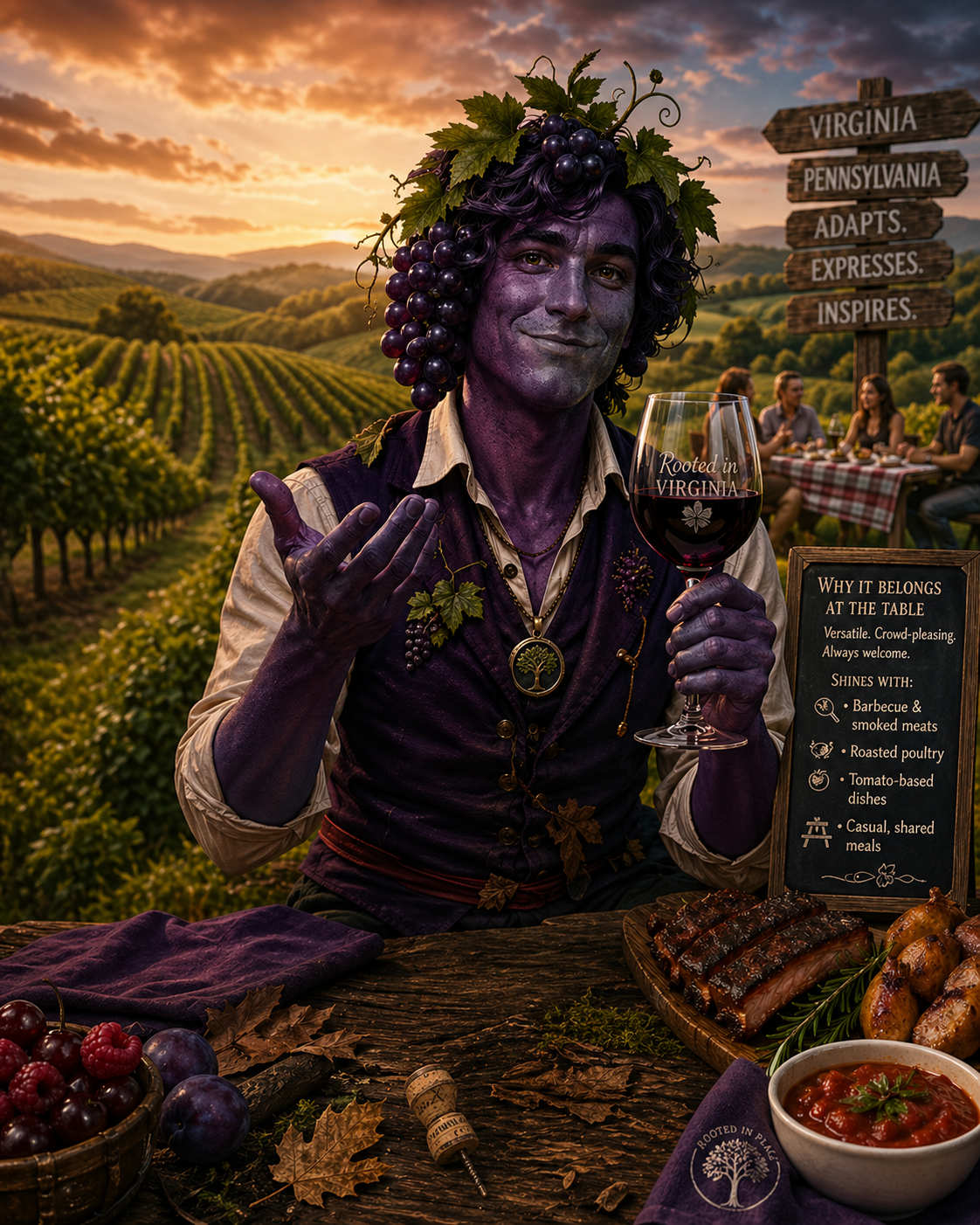
Chambourcin – The Storyteller in the Glass
What Chambourcin Really Is
Chambourcin is not bound by Old World rules. It wasn’t shaped by centuries of European tradition—it was shaped by necessity, adaptation, and place.
That makes it something different.
If Cabernet Sauvignon tells the story of lineage and legacy, Chambourcin tells the story of where it is now. It reflects the land, the season, and the hand of the winemaker more directly than most grapes.
It is not about repeating a known script.
It is about telling a new one.
What It Tells
Chambourcin speaks in layers—fruit, earth, and spice—each one revealing part of the landscape it comes from.
Typical voice in the glass:
- Fruit: cherry, raspberry, plum
- Earth: forest floor, damp leaves
- Spice: pepper, herbal notes
- Color: deep, inky purple
Sometimes the story is light and bright.
Sometimes it is darker, fuller, more structured.
The variation is the point.
Where the Story Comes From
Chambourcin thrives in places where other grapes struggle—especially in the eastern United States, including Virginia and Pennsylvania.
These are not easy growing regions. Weather shifts. Humidity rises. Seasons can turn quickly.
Because of that, Chambourcin becomes a recorder of conditions:
- In cooler years, it tells a brighter, sharper story—more acidity, more freshness
- In warmer seasons, it deepens—richer fruit, fuller texture
It reflects the vintage honestly, without smoothing over the edges.
How It Tells It
Chambourcin’s structure allows it to communicate clearly without overwhelming the drinker.
Typically:
- Medium body
- Moderate tannins
- Balanced acidity
- Moderate alcohol
This balance is what makes it expressive. Nothing dominates. Each element has room to speak.
The winemaker’s choices—oak, fermentation, aging—become part of the narrative, not something hidden behind tradition.
Why It Matters at the Table
Chambourcin is not a wine that demands ceremony. It belongs where people gather and share food.
It works especially well with:
- Barbecue and smoked meats
- Roasted chicken
- Tomato-based dishes
- Casual, shared meals
It adapts to the setting the same way it adapts in the vineyard.
That is part of its story too.
The Takeaway
If you remember one thing, make it this:
Chambourcin is the storyteller because it reflects place, season, and decision—more than tradition.
It tells you what happened that year.
It tells you where it was grown.
It tells you how it was made.
And no two tellings are exactly the same.
How to Recognize a Good Story
Look for:
✔ Bright fruit grounded by earth
✔ Balanced, lively acidity
✔ Smooth, approachable tannins
✔ Depth without heaviness
Be cautious of:
✖ Simple, one-note fruit
✖ Flat or dull character